Old World and New World Tarantulas

Information, New World, Old World 1 Comment »

What are New World (NW) and Old World (OW) tarantulas?

This seems to be asked a lot in the tarantula community and a lot of people are actually shocked at how simple the answer is. New World Tarantulas are species originally discovered in North, Middle and South America. While Old World Tarantulas come from Africa, Asia, Australia and parts of Europe.

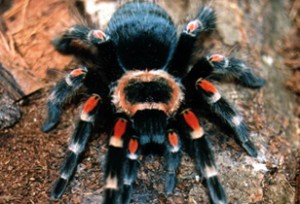
 

654456564           Mexican-Flame-Knee

(OW) The cobalt blue tarantula (Haplopelma lividum)       (NW) The Mexican Flame Knee (Brachypelma auratum)


What are the differences between the two?

Most New World tarantulas tend to be much slower then their counterpart Old World Tarantulas. Of course there are some exceptions especially for certain Genus’ (example: Psalmopoeus and Ephepobus). As most spiderlings are fast the aforementioned Genus’ are particularly fast.

Most Old World Tarantulas are a lot different from (NW). They are by far faster in speed and if not handling properly will easily bolt away from you.


Defenses:

(NW) Tarantulas have a lot of weapons of attack before resorting to biting. It’s primary form of defense is it’s urticating hairs which they shake off from their abdomen or pedipalps (depending on the genus). These small fine hairs cause immense irritation if stuck on your skin, eyes or even inhaled. Should some get lodged into your eyes you should flush it with water or seek medical attention. You might also see them go into a threat posture if you disturb them too much or they need you to back off which usually consists of them raising their front legs showing their fangs. For some species of New World tarantulas they have a defense mechanism called the poop cannon (such as the avicularia genus), though not painful or venomous it certainly is uncomfortable to get pooped on. These are all mostly indications given to you by your New World tarantula to not bother him/her before they try biting which though not potent in venom is still painful.


(OW) Tarantulas tend to be very aggressive and fast. They mostly do not have urticating hairs or other forms of defense and rely heavily on their strong bite and potent venom. Because of their lack of defenses you should handle them with utmost care (though we do not recommend you handling them at all). When threatened they go straight into a defensive stance and some even make noises by exhaling through their mouths and it even sounds aggressive. You can easily get bit by one of these tarantulas before you can even react due to their hostile behavior and speed. Though there has never been a reported case of a death from a human due to tarantula venom some old world tarantulas have a venom potent enough to cause serious pains in addition to sending you to the hospital requiring medical assistance.


To generalize New World tarantulas are more docile then Old World tarantulas and easier to handle (of course there are some exceptions). All in all do your homework as best possible when choosing either a (NW) or (OW) tarantula as a pet. We do recommend you only acquiring an (OW) once you have become a more experienced hobbyist and not as your first tarantula.


Spiderling Care

Care Sheet No Comments »

Spiderlings or slings are young or baby tarantulas ranging anywhere from .25 inches to 1.5 inches in length depending on how old it might be. The reason why so many people now opt in to buying a spiderling is due to the fact that they are usually a lot cheaper then adults and it is fascinating to watch them grow. As for growth rate, some species are very fast growing while others are extremely slow growing. It is best you chose which species is right for you. If your a beginner tarantula hobbyist we would recommend you start with a 1.5 inches or bigger spiderling. However here are some steps you can take to care for your sling.


Housing:

Depending on your species of tarantula spiderling it is key to know what enclosure and environment to have for your sling. Some common examples are

  • Terrestrial Tarantulas (Chilean Rosehair, Mexican Redknee, Brazilian Fire Red, etc): Smallest enclosures possible such as small pill jars of different sizes depending on your sling’s size until you can eventually move it into a deli container and eventually a 5 gallon tank (once a juvenile over 2 inches).
  • Arboreal Tarantulas (Pinktoe, Red Slate Ornamental, Pokies, etc): Small enclosure with height such as tall pill jars in different sizes depending on your sling’s size as they do love to climb and be up from the ground. As they get older you can switch them into tall spice jars until big enough to eventually switch to taller terrariums (once a juvenile over 2 inches).

You will find that slings do tend to burrow a lot more then your average tarantula, so be sure to add a extra substrate to the enclosures so they have enough space to do so. It is also important to make sure that each lid of your enclosure have air holes in them to provide your tarantula with adequate air to breathe. Make sure these holes are not big enough to where your sling can escape.


Food:

Feeding can be difficult as these spiderlings require much smaller prey then a full grown tarantula. You can crush a small cricket and leave that in their enclosure so they can eat off of it. As they do start to grow a little you can eventually just add smaller insects such as small juvenile or pinhead crickets as well as fruit flies. Once you see your sling getting closer to 1.5 to 2 inches you can start feeding it slightly bigger prey.


Water:

Spiderlings that are less than 1.5 inches cannot drink from waterbowls, they will surely drown. It is best to just water the substrate slightly (in which we do recommend eco-earth) or even just put some droplets to rest on top of the substrate or you can simply add a small plant leaf with a couple of water droplets on it. Once your tarantula does grow closer to 2 inches you can use a plastic bottle cap as a water dish in its small enclosure before being able to move to a big water dish. This all should provide plenty of water and humidity for your young tarantula.


Heat:

For spiderlings just make sure they are kept in a warm room. Being that they are so small it is not recommended to use a heating source on them as this might end up being too hot for their small enclosures. In addition do not place them under direct sunlight as this tends to stress out your tarantula. A room temperature of about 75-85 degrees should be adequate for them. You do not have to worry about light as most tarantulas actually prefer the darkness over light.


Following these instructions will most definitely help you with your sling. As always we are all here to help so feel free to drop us a comment for any additional help.

Costa Rican Tiger Rump (Cyclosternum fasciatum)

Cyclosternum, New World 3 Comments »

This new world tarantula is both native to Costa Rica and Guatemala. These spiders are known for their beautiful colors and stripes. These are very active tarantulas and spend most of their time spinning webs and or burrowing. The Costa Rican Tiger Rump is a fast grower but usually will not grow larger then 4 inches in size. They are great display spiders due to their heavy webbing. Males live to be about 5 to 6 years while females live a lot longer and well over 10 years.


669782-img-1365337662-9


Habitat:

We would recommend an enclosure with e temperature between 70 to 80 degrees and humidity level of 75 to 85 percent. These animals burrow a lot so make sure your substrate has a depth of at lest 3 to 4 inches. We would recommend something such as eco-earth with maybe some additional peat moss. Your enclosure size should be between 5 to 15 gallons in size depending on the size of your tarantula. For slings we do recommend you mist/spray your enclosure once a week. Having a small plant leaf with a few droplets of water on it also works well. As for full adults make sure to have a water dish full at all times in addition to spraying/misting the enclosure a few times a week.


Feeding:

Full grown adults are known to eat quite a bit. A steady diet of crickets and roaches should do the trick just fine for your adult costa rican tiger rump. As for slings (spider-lings) we recommend you try feeding them small pinhead crickets. They are also known for being scavengers and you can feed your sling a pre-killed crickets to feast on.


Attitude:

Though you can handle them we would not recommend it. They are very skittish and are defensive animals who do not hesitate to kick back some urticating hairs. Handle with utmost care.


All in all the Costa Rican Tiger Rump is a beautiful pet to have and is sure to be a crowd pleaser. Just be careful if you are to handle him.


Verified by ExactMetrics