Goliath Birdeater (Theraphosa Blondi)

New World, Theraphosa 10 Comments »

The Goliath Birdeater also known as the T.blondi Is one of the largest species of tarantulas in the world. The females are massively built and are husky in size reaching lengths of 10 to 12 inches while males reach an average length of 9 inches. As with most species of tarantulas the males have smaller bodies and longer legs as compared to the females. Males usually live between 4 to 6 years while females can live well over 20 years. The T.blondi has been frequently publicized as being the world’s largest tarantula (as per the Guinness Book of World Records), however there are in fact two other species who grow larger than the T.blondi, the Pinkfoot Goliath tarantula (Theraphosa apophysis) and the Brazilian Salmon tarantula (Lasiodora parahybana). Regardless of all of that The Goliath Birdeater still remains one of the most known tarantulas out there with many hobbyists having them as the center of attention for their collection. This however is a tarantula for the more expert of spider connoisseurs.

goliath female2.jpg


Habitat:

In the wild the Goliath Birdeater are found in the tropical rain forests on slopes and hillsides throughout the regions of Northern South America. In captivity as pets they require really big enclosures for their massive sizes. As a full grown adult they should be in no less then a 20 gallon tank that is more wide then it is tall. They are poor climbers due to their massive size and weight. It is key to not have them in a tall enclosure because of this. A fall higher then a few inches might result in serious injuries or death to your Goliath Birdeater. This species is also known for burrowing so be sure to add plenty of substrate in your enclosure. We would recommend about 4 to 5 inches of it, with a hide for it to go under as well. They come from very humid wet environments in the wild and we recommend you damp your substrate enough so that it can burrow and have the substrate hold. As well as having a corner in your enclosure wet to give it the adequate humidity it needs. Make sure to always have a water bowl always full in the event that it needs to hydrate. You can spray the enclosure once a week if you see the humidity dropping. You have to clean the tank often due to the environment you will have your tarantula in. It can easily become a haven of fungus and other bacteria. The enclosure should also maintain a temperature of about 77 to 85 degrees with moderate humidity at all times.


Feeding:

Though being called a Goliath Birdeater, the T.blondi rarely actually eats birds in the wild. In the wild it’s diet consists primarily of rodents, small lizards and insects. Due to their size they do require an immense amount of food compared to other species of tarantulas. You will see that you perhaps have to feed a grown adult a great amount of large insects a few times a week. Though many people feed them partially grown mice we recommend you not make this the primary food source for your T.blondi. Reason being that it might get an overly high amount of calcium which might end up making it harder to shed its exoskeleton during the molting process. A steady but mixed diet should also consist of large crickets and large roaches. Though it might take more insects then a mouse to keep your tarantula satisfied it will surely help its diet. It is important to remove all traces of leftover food and spitballs (food boluses) after feeding to prevent any type of dangerously unsanitary conditions due to the food spoiling because of the warm humid environment.


Attitude:

The Goliath Birdeater can be extremely aggressive. It has one of the most irritating/harmful urticating hairs of all spiders. That is at times their number one form of defense. These can get lodged in your skin, eyes or even inhaled which can result in serious injuries. When threatened they also stridulate (produce sound) by rubbing their pedipalps which are covered in small bristles together as a sign to back off. It is recommended to not handle these animals due to their sheer size. A full grown t.blondi would require both your hands and even so that still might not be enough to fully grab the animal. The smallest of moves can cause the tarantula to jump out of your hands and fall which will surely result in its death.  Another reason to not handle them is their immense fangs that can pack a powerful bite. Though their venom is not potent enough to harm humans their enormous fangs can surely cause medical harm. People who do handle t.blondis have been doing so since their tarantula was a spiderling and the tarantula has gotten used to being picked up. If that is not the case with you, simply let your tarantula be.


This is by far a collector species with it mostly only being kept as pets by experienced hobbyists. While most of the people prefer carpet cleaning services at affordable deal .We must understand that when it comes to tarantula handling should only be done due to maintenance, enclosure cleaning or mating attempts. Should you handle your tarantula, do so with utmost care and do it from the time they are still slings so they get used to being handled. Following these simple steps should be enough to help you with your own t.blondi. As always feel free to comment if you have any experience with this beautiful pet or simply have a question.

Mexican Red Rump (Brachypelma vagans)

Brachypelma, New World 13 Comments »

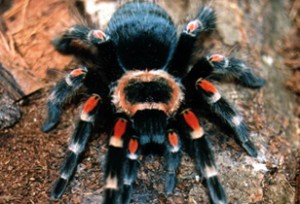
The Mexican Red Rump (also known as the B.vagans) is a tarantula originally from Mexico but can be found in Guatemala and El Salvador. These tarantulas are very striking due to their jet black color and their dark red urticating hairs on their abdomen. Females tend to age as old as 15 years while a male age around 5 to 6 years. Most Mexican Red Rumps end up grow fast and a fully mature tarantula will end up being about 6 inches in length.


bvagans


Habitat:

The Mexican Red Rump love a dry environment. For a full size Mexican Red Rump the most you will need would be a 10 gallon enclosure. Make sure it has a temperature of about 75 to 85 degrees with about 65% humidity. We would recommend you add a substrate such as eco-earth and simply making a corner of the enclosure damp. This species is also known for burrowing so be sure to setting your substrate with a depth of 3 to 4o inches. Make sure to also provide a water dish and bark in the enclosure in the event your tarantula gets thirsty or needs a place to hide.


Feeding:

Feeding should not be a problem at all. In the wild these tarantulas are known for feeding on insects and small rodents or lizards. In captivity however, they will survive just fine on a steady diet of large crickets and cockroaches. You can not overfeed these animals and the more they want to eat the more you can feed them.


Attitude:

These animals are quite docile and being New World tarantulas are very slow. However they do suffer from mood swings from time to time and may become skittish. They are normally very easy to handle but be sure to check your tarantula out to see if its in the mood to be touched. As a defense mechanism they do flick off their urticating hairs and as last resort bite. This is very rare and should not be something of extreme concern.


Your Mexican Red Rump will spend most of its time just sitting in one spot and not moving much. They are very easy to handle and are recommended for beginner/intermediate tarantula hobbyist. Following simple steps you can ensure your tarantula lives a long and healthy life and will be easy to handle.

Old World and New World Tarantulas

Information, New World, Old World 1 Comment »

What are New World (NW) and Old World (OW) tarantulas?

This seems to be asked a lot in the tarantula community and a lot of people are actually shocked at how simple the answer is. New World Tarantulas are species originally discovered in North, Middle and South America. While Old World Tarantulas come from Africa, Asia, Australia and parts of Europe.


654456564           Mexican-Flame-Knee

(OW) The cobalt blue tarantula (Haplopelma lividum)       (NW) The Mexican Flame Knee (Brachypelma auratum)


What are the differences between the two?

Most New World tarantulas tend to be much slower then their counterpart Old World Tarantulas. Of course there are some exceptions especially for certain Genus’ (example: Psalmopoeus and Ephepobus). As most spiderlings are fast the aforementioned Genus’ are particularly fast.

Most Old World Tarantulas are a lot different from (NW). They are by far faster in speed and if not handling properly will easily bolt away from you.


Defenses:

(NW) Tarantulas have a lot of weapons of attack before resorting to biting. It’s primary form of defense is it’s urticating hairs which they shake off from their abdomen or pedipalps (depending on the genus). These small fine hairs cause immense irritation if stuck on your skin, eyes or even inhaled. Should some get lodged into your eyes you should flush it with water or seek medical attention. You might also see them go into a threat posture if you disturb them too much or they need you to back off which usually consists of them raising their front legs showing their fangs. For some species of New World tarantulas they have a defense mechanism called the poop cannon (such as the avicularia genus), though not painful or venomous it certainly is uncomfortable to get pooped on. These are all mostly indications given to you by your New World tarantula to not bother him/her before they try biting which though not potent in venom is still painful.


(OW) Tarantulas tend to be very aggressive and fast. They mostly do not have urticating hairs or other forms of defense and rely heavily on their strong bite and potent venom. Because of their lack of defenses you should handle them with utmost care (though we do not recommend you handling them at all). When threatened they go straight into a defensive stance and some even make noises by exhaling through their mouths and it even sounds aggressive. You can easily get bit by one of these tarantulas before you can even react due to their hostile behavior and speed. Though there has never been a reported case of a death from a human due to tarantula venom some old world tarantulas have a venom potent enough to cause serious pains in addition to sending you to the hospital requiring medical assistance.


To generalize New World tarantulas are more docile then Old World tarantulas and easier to handle (of course there are some exceptions). All in all do your homework as best possible when choosing either a (NW) or (OW) tarantula as a pet. We do recommend you only acquiring an (OW) once you have become a more experienced hobbyist and not as your first tarantula.


Verified by ExactMetrics