Old World and New World Tarantulas
Information, New World, Old World 1 Comment »What are New World (NW) and Old World (OW) tarantulas?
This seems to be asked a lot in the tarantula community and a lot of people are actually shocked at how simple the answer is. New World Tarantulas are species originally discovered in North, Middle and South America. While Old World Tarantulas come from Africa, Asia, Australia and parts of Europe.

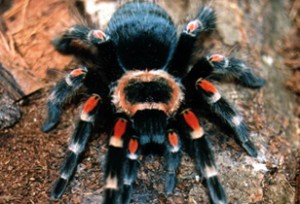
(OW) The cobalt blue tarantula (Haplopelma lividum) (NW) The Mexican Flame Knee (Brachypelma auratum)
What are the differences between the two?
Most New World tarantulas tend to be much slower then their counterpart Old World Tarantulas. Of course there are some exceptions especially for certain Genus’ (example: Psalmopoeus and Ephepobus). As most spiderlings are fast the aforementioned Genus’ are particularly fast.
Most Old World Tarantulas are a lot different from (NW). They are by far faster in speed and if not handling properly will easily bolt away from you.
Defenses:
(NW) Tarantulas have a lot of weapons of attack before resorting to biting. It’s primary form of defense is it’s urticating hairs which they shake off from their abdomen or pedipalps (depending on the genus). These small fine hairs cause immense irritation if stuck on your skin, eyes or even inhaled. Should some get lodged into your eyes you should flush it with water or seek medical attention. You might also see them go into a threat posture if you disturb them too much or they need you to back off which usually consists of them raising their front legs showing their fangs. For some species of New World tarantulas they have a defense mechanism called the poop cannon (such as the avicularia genus), though not painful or venomous it certainly is uncomfortable to get pooped on. These are all mostly indications given to you by your New World tarantula to not bother him/her before they try biting which though not potent in venom is still painful.
(OW) Tarantulas tend to be very aggressive and fast. They mostly do not have urticating hairs or other forms of defense and rely heavily on their strong bite and potent venom. Because of their lack of defenses you should handle them with utmost care (though we do not recommend you handling them at all). When threatened they go straight into a defensive stance and some even make noises by exhaling through their mouths and it even sounds aggressive. You can easily get bit by one of these tarantulas before you can even react due to their hostile behavior and speed. Though there has never been a reported case of a death from a human due to tarantula venom some old world tarantulas have a venom potent enough to cause serious pains in addition to sending you to the hospital requiring medical assistance.
To generalize New World tarantulas are more docile then Old World tarantulas and easier to handle (of course there are some exceptions). All in all do your homework as best possible when choosing either a (NW) or (OW) tarantula as a pet. We do recommend you only acquiring an (OW) once you have become a more experienced hobbyist and not as your first tarantula.

